
Amyloid Strain Pattern
Amyloid Strain Pattern - Gls and e/e’ have a high probability of being abnormal in the early stages of cardiac amyloidosis. Web amyloidosis is characterized by increased native (noncontrast) t1 and increased extracellular volume fraction. Thickened myocardium, diastolic dysfunction, and abnormal strain (apical sparing) atypical or subtle findings may be seen in early disease. Web this feature tracking mri analysis sheds light on strain mechanics in a cohort of multiple myeloma associated cardiac amyloidosis with a significant number of cases with normal lv wall thickness and explains mechanism of apical sparing effect. Although advanced ca confers significant morbidity and mortality, the magnitude of deposition and ensuing clinical manifestations vary greatly. Monoclonal immunoglobulin light chain amyloidosis. Atrial (la) strain showing reservoir and booster components. 4 strain echocardiography typically reveals. This topic will review the echocardiographic features of the various types of cardiomyopathy. Web one of the most intriguing discoveries in ca is the unraveling of the existence of a cherry‐like strain preservation pattern in the left ventricular apex (compared with other segments) with an extraordinarily high degree of spatial resolution. Left ventricular strain imaging in cardiac amyloidosis. Cardiomyopathies include a variety of myocardial disorders that manifest with various structural and functional phenotypes with familial and nonfamilial types. Web the lower right box is a colour mmode of regional strain values throughout one cardiac cycle. Web the accuracy of an apical‐sparing strain pattern on transthoracic echocardiography (tte) for predicting cardiac amyloidosis (ca) has varied in prior studies depending on the underlying cohort. Shining light on amyloid architecture. sciencedaily. Web speckle strain imaging of the lv shows an unusual pattern, which strongly suggests cardiac amyloidosis. Web cardiac amyloidosis is a form of infiltrative cardiomyopathy due to deposition of amyloid fibrils in the myocardium. Web this case report illustrates how myocardial strain echocardiography, by displaying significantly reduced gls and unique regional systolic strain patterns, can be used clinically to identify ca and distinguish it from other diseases. The left upper panel shows graphically the 3 normal cardiac strains, whereas the right upper panel shows their evolution in time. Web amyloid fibrils infiltrate the valves and the atria, as well as the ventricular myocardium. Left ventricular strain imaging in cardiac amyloidosis. Web this feature tracking mri analysis sheds light on strain mechanics in a cohort of multiple myeloma associated cardiac amyloidosis with a significant number of cases with normal lv wall thickness and explains mechanism of apical sparing effect. Although advanced ca confers significant morbidity and mortality, the magnitude of deposition and ensuing clinical. Web cardiomyopathy is defined as a disease of heart muscle. Gls and e/e’ have a high probability of being abnormal in the early stages of cardiac amyloidosis. Monoclonal immunoglobulin light chain amyloidosis. Web cardiac amyloidosis is a form of infiltrative cardiomyopathy due to deposition of amyloid fibrils in the myocardium. Web the accuracy of an apical‐sparing strain pattern on transthoracic. Most cases of ca result from 2 protein precursors ( figure 1 ): Web amyloidosis is characterized by increased native (noncontrast) t1 and increased extracellular volume fraction. Shining light on amyloid architecture. sciencedaily. Although advanced ca confers significant morbidity and mortality, the magnitude of deposition and ensuing clinical manifestations vary greatly. Thickened myocardium, diastolic dysfunction, and abnormal strain (apical sparing). Although advanced ca confers significant morbidity and mortality, the magnitude of deposition and ensuing clinical manifestations vary greatly. Web this feature tracking mri analysis sheds light on strain mechanics in a cohort of multiple myeloma associated cardiac amyloidosis with a significant number of cases with normal lv wall thickness and explains mechanism of apical sparing effect. The left upper panel. Cardiac deformation and its use in cardiac amyloidosis (ca). Lower panels provide clues for the calculation of basic deformation parameters for ca diagnosis. The three concentric circles report, from outside to inside, the mechanisms of cardiac damage, the main pathophysiological abnormalities, and the corresponding echocardiographic findings. <<strong>www.sciencedaily.com</strong> / releases / 2024 / 07 / 240719180309.htm. Monoclonal immunoglobulin light chain amyloidosis. Monoclonal immunoglobulin light chain amyloidosis. Web the longitudinal bull’s eye plot pattern in hypertensive individuals without lvh may be very similar to that in athletes without lvh, displaying a normal average global longitudinal strain with a slightly reduced longitudinal strain at the basal segments. Cardiomyopathies include a variety of myocardial disorders that manifest with various structural and functional phenotypes with. The lge pattern observed in amyloidosis is a diffuse pattern that progresses from subendocardial to transmural and does not follow a specific coronary distribution. Web speckle strain imaging of the lv shows an unusual pattern, which strongly suggests cardiac amyloidosis. Echo may be the first clue to the diagnosis of amyloidosis. Web this feature tracking mri analysis sheds light on. The lge pattern observed in amyloidosis is a diffuse pattern that progresses from subendocardial to transmural and does not follow a specific coronary distribution. Gls and e/e’ have a high probability of being abnormal in the early stages of cardiac amyloidosis. Lower panels provide clues for the calculation of basic deformation parameters for ca diagnosis. Note the significantly reduced basal. Monoclonal immunoglobulin light chain amyloidosis. Most cases of ca result from 2 protein precursors ( figure 1 ): Atrial (la) strain showing reservoir and booster components. The left upper panel shows graphically the 3 normal cardiac strains, whereas the right upper panel shows their evolution in time. Web cardiac amyloidosis is a form of infiltrative cardiomyopathy due to deposition of. Web in the challenging subgroups (maximum wall thickness ≤16 mm and ef>55%), ef global longitudinal strain ratio remained the best predicting parameter of ca diagnosis (multiple logistic regression models p <0.00005 and p =0.0002, respectively) independent of the ca type. Although advanced ca confers significant morbidity and mortality, the magnitude of deposition and ensuing clinical manifestations vary greatly. <<strong>www.sciencedaily.com</strong> /. Web cardiomyopathy is defined as a disease of heart muscle. 4 strain echocardiography typically reveals. Web this feature tracking mri analysis sheds light on strain mechanics in a cohort of multiple myeloma associated cardiac amyloidosis with a significant number of cases with normal lv wall thickness and explains mechanism of apical sparing effect. Web the longitudinal bull’s eye plot pattern in hypertensive individuals without lvh may be very similar to that in athletes without lvh, displaying a normal average global longitudinal strain with a slightly reduced longitudinal strain at the basal segments. Atrial (la) strain showing reservoir and booster components. Cardiac deformation and its use in cardiac amyloidosis (ca). Note the significantly reduced basal (yellow and red) and mid (light and dark blue) lv longitudinal strain, with relative apical (purple and green) sparing in all four boxes. Monoclonal immunoglobulin light chain amyloidosis. Web the lower right box is a colour mmode of regional strain values throughout one cardiac cycle. Although advanced ca confers significant morbidity and mortality, the magnitude of deposition and ensuing clinical manifestations vary greatly. The left upper panel shows graphically the 3 normal cardiac strains, whereas the right upper panel shows their evolution in time. Web in the challenging subgroups (maximum wall thickness ≤16 mm and ef>55%), ef global longitudinal strain ratio remained the best predicting parameter of ca diagnosis (multiple logistic regression models p <0.00005 and p =0.0002, respectively) independent of the ca type. Web one of the most intriguing discoveries in ca is the unraveling of the existence of a cherry‐like strain preservation pattern in the left ventricular apex (compared with other segments) with an extraordinarily high degree of spatial resolution. Gls and e/e’ have a high probability of being abnormal in the early stages of cardiac amyloidosis. <<strong>www.sciencedaily.com</strong> / releases / 2024 / 07 / 240719180309.htm. Web amyloid fibrils infiltrate the valves and the atria, as well as the ventricular myocardium.
Echocardiographic features of cardiac amyloidosis. A Apical 4 chamber

Echo Parameters for Differential Diagnosis in Cardiac Amyloidosis

What Is Lv Strain Pattern Natural Resource Department
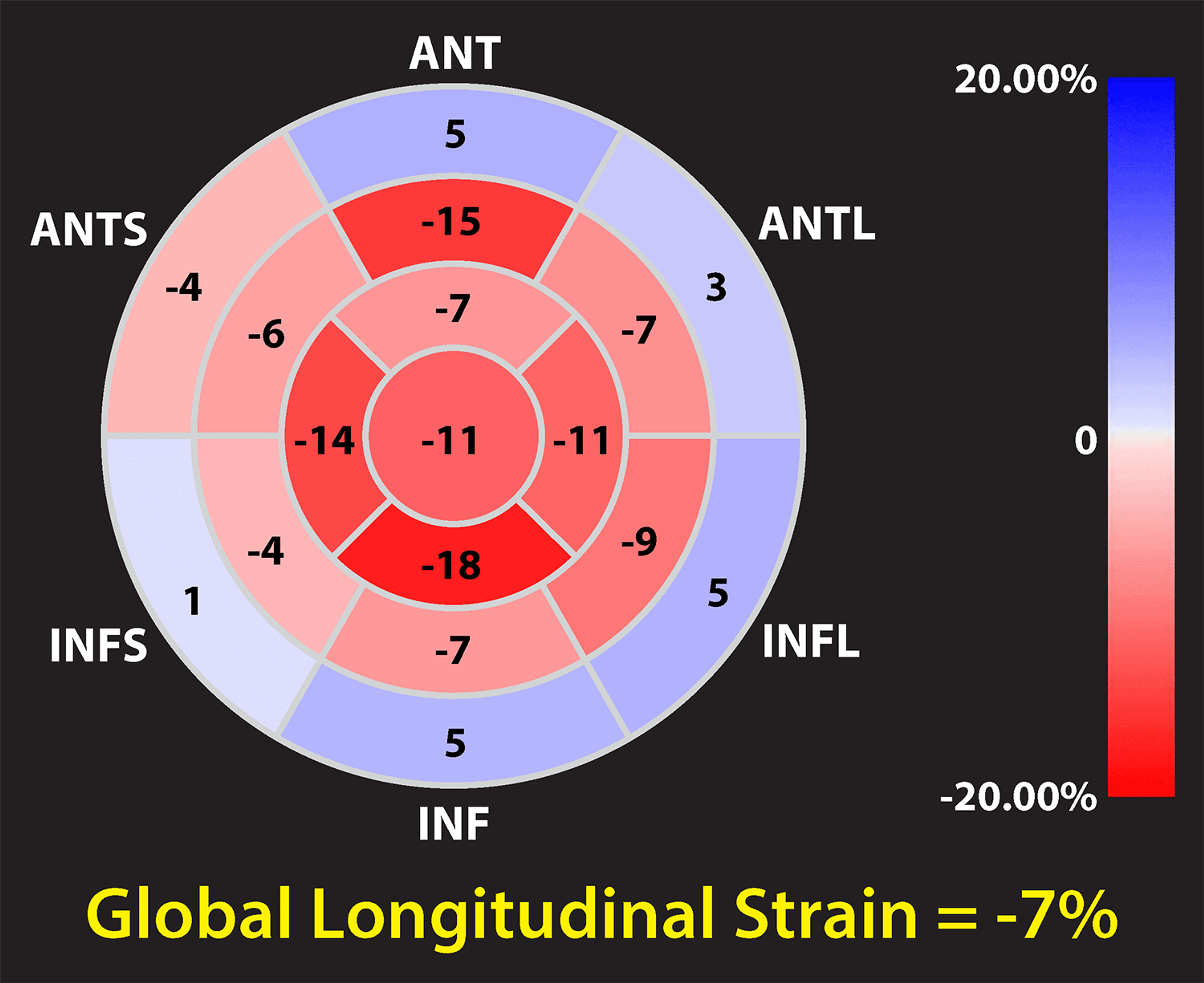
Amyloid Strain Pattern

(PDF) Relative apical sparing of longitudinal strain using two
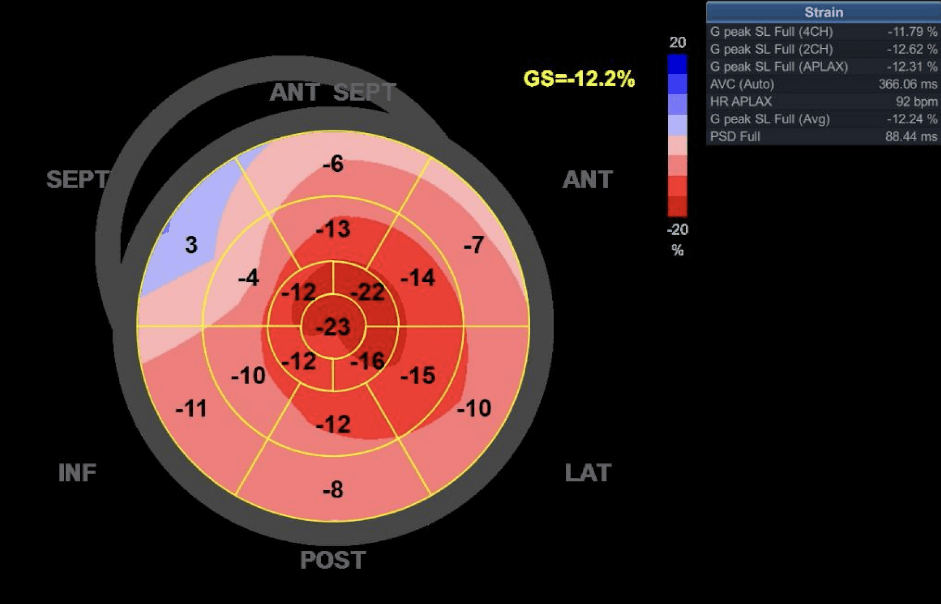
Amyloid Strain Pattern

Relative apical sparing of longitudinal strain using twodimensional
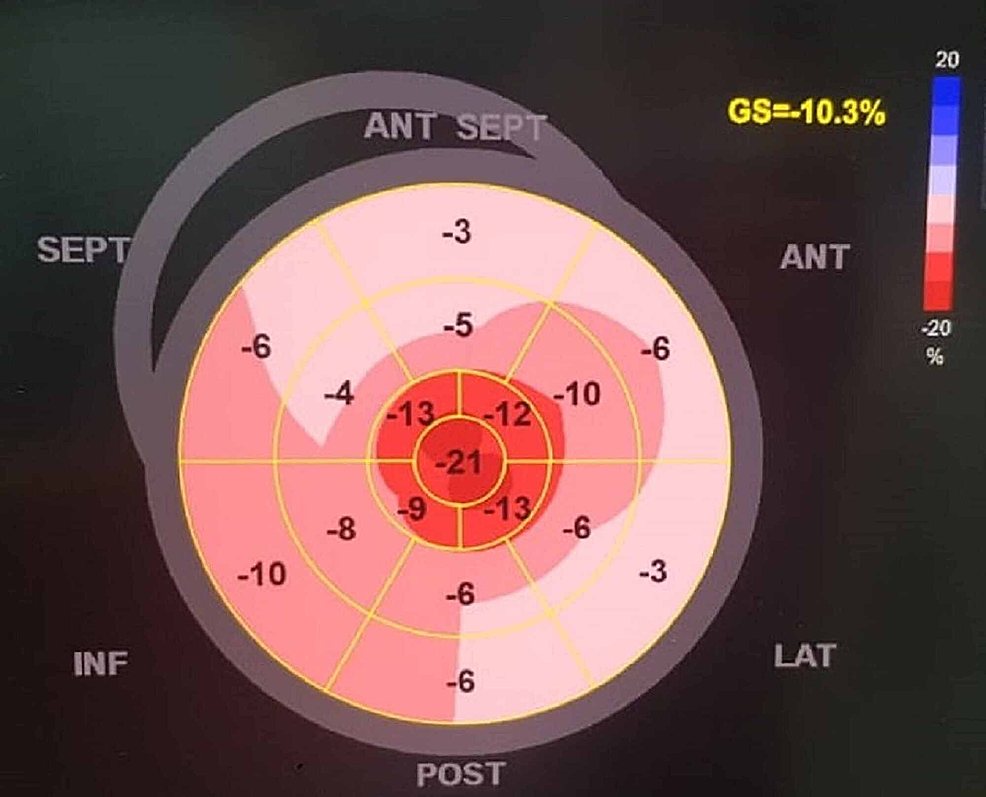
Cureus Role of Echocardiography in the Diagnosis of Light Chain
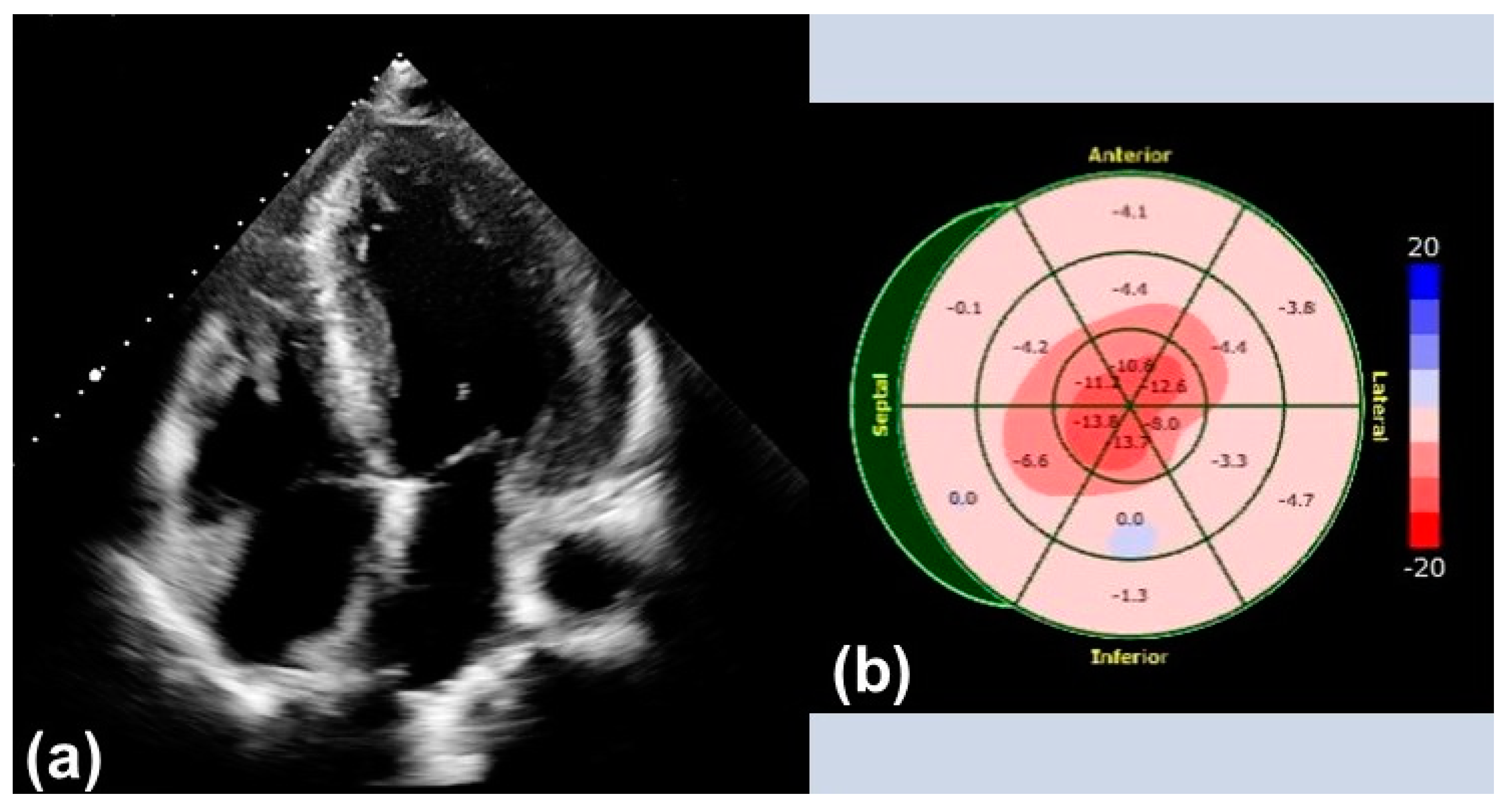
Biomedicines Free FullText Advanced Imaging in Cardiac Amyloidosis

Global and Regional Variations in Transthyretin Cardiac Amyloidosis A
Thickened Myocardium, Diastolic Dysfunction, And Abnormal Strain (Apical Sparing) Atypical Or Subtle Findings May Be Seen In Early Disease.
Web Cardiac Amyloidosis (Ca) Is A Disease Characterized By The Deposition Of Misfolded Protein Deposits In The Myocardial Interstitium.
Web The Accuracy Of An Apical‐Sparing Strain Pattern On Transthoracic Echocardiography (Tte) For Predicting Cardiac Amyloidosis (Ca) Has Varied In Prior Studies Depending On The Underlying Cohort.
Shining Light On Amyloid Architecture. Sciencedaily.
Related Post: